People think a licensed PI can call a bank and read off anyone's balance. Federal law says otherwise. Lying to a bank, or to its customer, to get account details is a crime under 15 U.S.C. 6821, with up to 5 years in federal prison, and up to 10 when it's part of a bigger scheme.12 What a New York PI can do is find where the money and property are through public records. Then, once you hold a court judgment, your lawyer can make the bank answer.
- No bank access a PI license opens no door at any bank, for balances, statements or transactions
- Federal crime pretexting a bank is up to 5 years, and so is asking someone else to do it for you
- Public records are fair game deeds, liens, business filings, lawsuits and bankruptcies tell a lot
- The judgment is the key New York's CPLR 5223 and 5224 let a judgment creditor make a bank answer questions in writing
- One narrow PI exception it covers child support a court already found overdue, with a court order behind it
We vet New York investigators for a living, and the bank question lands on our desk all the time. A business partner moved money. A tenant skipped out owing rent. A customer lost a lawsuit and claims to be broke. Each person wants one thing, which is the account number and the balance.
A good PI gets you most of the way there. The last step goes through a lawyer and a court. Knowing which step is which saves you money, and it can keep you out of trouble.
Why Banks Say No to a PI
The federal law is the Gramm-Leach-Bliley Act. Its pretexting section, 15 U.S.C. 6821, makes it a violation to get a bank customer's information about someone else by a false statement to the bank's staff, or to one of its customers.1 Handing the bank a forged, stolen or false document is covered too. So is asking someone else to get the information when you know they'll use those tricks. That last part reaches the client who hires the investigator.
The reach is wide. The law defines customer information as any information a bank keeps that comes from its relationship with a customer.3 That covers balances, statements, deposits and account numbers. It even covers the plain fact of whether someone banks there at all.
The penalty sits in 15 U.S.C. 6823. A knowing violation, or even an attempt, carries a fine and up to 5 years in prison. If it happens while breaking another federal law, or as part of a pattern over $100,000 in 12 months, the cap rises to 10 years and the fine doubles.2
A law people mix up. You'll read that the Right to Financial Privacy Act keeps PIs out of your bank. It doesn't. That law limits a "Government authority," defined as a federal agency or department and its staff.4 The law that actually stops a private investigator is Gramm-Leach-Bliley.
The Narrow Exceptions in the Law
Section 6821 lists who may still get customer information. None of it is a back door for a hired PI on an ordinary case.1
| Who | When it applies | Does it help a hired PI? |
|---|---|---|
| Law enforcement | Officers doing their official duties | No. A PI is not law enforcement in New York. |
| The bank itself | Testing its own security, looking into its own staff, or getting back stolen data | Only when the bank hires the PI for its own work |
| Insurers | Looking into fraud or misstatements, where state law allows it | Only on insurance fraud work for the insurer |
| Licensed PIs on child support | Collecting support from a parent a court found overdue, backed by a court order or judgment | Yes, but only that narrow case |
The child support line is section 6821(g). It is the only spot where the law names a state licensed private investigator. Even then, the work must be lawful under other federal and state law, and a court order or judgment must authorize it.1 A divorce in progress, a business dispute or an unpaid invoice doesn't qualify.
The fifth line in the law covers public records filed under the securities laws. That's public filing data, not a bank account.
What a New York Asset Search Can Find
This is where a PI earns the fee. Money leaves tracks in public records. A person who owns a building, runs a company or borrowed against equipment shows up in places anyone can search. The skill is knowing all of them and tying them to the right person.
| Asset or clue | Where it shows up in New York | What it tells you |
|---|---|---|
| Real estate in Manhattan, Brooklyn, Queens or the Bronx | ACRIS, the city register system, with records from 1966 on5 | Deeds, mortgages and who signed them |
| Real estate on Staten Island and outside the city | The county clerk where the land sits, under Real Property Law 2916 | Deeds and mortgages, county by county |
| Companies and LLCs | The Department of State business entity database7 | Which entities exist and their filing details |
| Loans against business property | The state UCC and lien search7 | Lenders with a claim on equipment, stock or receivables, plus federal tax lien notices |
| Bankruptcy and federal suits | PACER, at $0.10 a page with a $3 cap per document8 | Sworn lists of assets, debts and bank accounts |
| Forgotten money | The State Comptroller's unclaimed funds search9 | Old accounts, uncashed checks and stock turned over to the state |
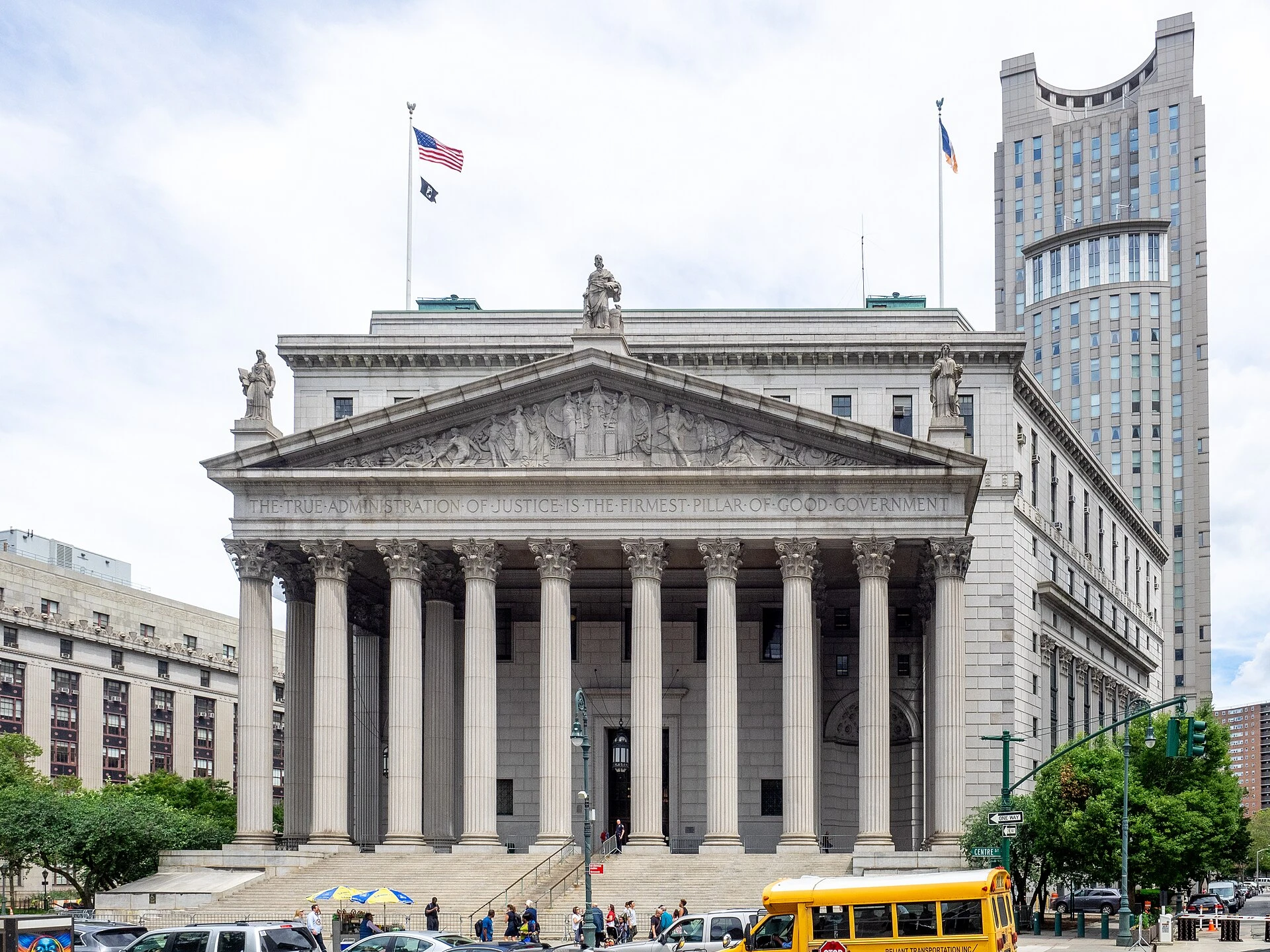
Real Estate
Property is the asset hardest to hide. ACRIS covers four boroughs and goes back to 1966.5 A mortgage on a deed often names the lender, and that's a real lead on where a person banks. Staten Island and the rest of the state record deeds with the county clerk.6 So a statewide search means checking more than one office.
Businesses, Liens and UCC Filings
A UCC financing statement gives notice that a lender may have a claim on a debtor's personal property.7 The New York search runs by debtor name, filing number or secured party. A filing that names a bank as the secured party tells you where the business borrows. It often points to where the business keeps its money too.
Lawsuits, Judgments and Bankruptcy
Old lawsuits show who else is chasing the same person. A bankruptcy filing is better still. The debtor lists assets and accounts under penalty of perjury, and PACER waives fees for anyone who spends $30 or less in a quarter.8
Unclaimed Funds
The Comptroller holds old bank accounts, uncashed checks and stock. Searching and claiming are free.9 If a locator offers to find your own money for a cut, New York caps that fee at 15 percent of the property's value. The deal must be in writing, signed in front of a notary, and it must say in bold that you can claim the money yourself for free.10
Making a Bank Talk After a Judgment
Here New York gives a winner real power. Once you hold a money judgment, CPLR 5223 lets you compel disclosure of anything relevant to collecting it. It works until the judgment is paid or vacated, and it starts with a subpoena.11 Your PI's research decides where that subpoena goes.
- Win the judgmentNothing in this list works without one. Before that, bank records come from the account holder or through discovery in the case.
- The PI builds the lead listMortgage lenders, UCC secured parties and accounts named in old court papers point to the likely banks.
- Serve an information subpoenaUnder CPLR 5224 the creditor or the lawyer certifies a good reason to think the bank has useful information. Written answers are due in 7 days.
- Freeze the accountA restraining notice under CPLR 5222 holds the money for up to one year.
Three details trip people up. First, a third party information subpoena without the required certification is void.12 Second, the bank can't freeze everything. If exempt payments like Social Security landed in the account in the past 45 days, $2,500 stays free. A separate floor protects 240 times the federal or state minimum hourly wage, whichever is higher.13 Third, once a bank holds twice what's due, the notice stops reaching other money.13
And who signs? Under CPLR 2302, an attorney of record can issue a subpoena without a judge. Court clerks, referees and certain officials can too.14 A PI is not on that list. The investigator finds the bank. The lawyer makes it answer.
Offers That Should End the Call
Some search companies sell "bank account searches" with no court order behind them. A well known piece by the investigations firm Charles Griffin Intelligence called those services almost certainly illegal.15 They usually sound like one of these, and each one fails.
- "No hit, no fee on bank accounts." No public record shows a balance. The only fast route to one is someone lying to a bank, which is section 6821.
- "We have a source inside the bank." Asking a source to pretext for you is its own violation under 6821(b).
- "Give us their Social Security number and we'll get statements." Statements come from the account holder, from discovery, or from a judgment subpoena. Nothing else.
- "We find hidden money for a percentage." If it's state held unclaimed funds, New York caps that fee at 15 percent and the claim itself is free.10
Paying for illegal records can wreck your case and expose you as the one who asked. Before you hire anyone, use our guide to checking a private investigator license in New York. If an investigator already made one of these offers, our guide on filing a complaint against a private investigator shows where to report it. Call logs are off limits too, under a different federal law, which we cover in our phone records guide.
What We Hear Most
Can a private investigator get bank records in New York?
Not someone else's on their own. Getting bank customer information by lying to the bank or its customer is a federal crime under 15 U.S.C. 6821, with up to 5 years in prison. Records come out through the account holder, discovery in a lawsuit, or a judgment creditor's subpoena.
Can a PI find out where someone banks?
Sometimes, from public records. A mortgage, a UCC filing naming a bank as lender, or a bankruptcy schedule can point to the bank. Confirming the account and its balance takes a court process, such as an information subpoena after a judgment.
How far back can you trace bank accounts?
Public records can reach back years. ACRIS property records in four boroughs start in 1966. The account history itself only comes through a subpoena or discovery, and how far back depends on the court and the bank's own records.
Who can access my bank statements?
You, anyone you authorize, the bank for its own work, law enforcement with legal process, and a party with a subpoena or court order in a case. A private investigator is not on that list unless you hire them and hand the statements over yourself.
What is an asset search?
It is a records search for property, businesses, liens, court cases and other signs of money tied to a person or company. In New York it draws on ACRIS, county clerk deeds, Department of State business and UCC records, PACER and unclaimed funds.
What is an information subpoena in New York?
It is a set of written questions a judgment creditor serves under CPLR 5224 on the debtor or on a third party such as a bank. The answers are due within 7 days. A third party subpoena must carry the creditor's certification or it is void.
Where These Numbers Come From
- 15 U.S.C. 6821, privacy protection for customer information of financial institutions, accessed October 2026. Back
- 15 U.S.C. 6823, criminal penalty, accessed October 2026. Back
- 15 U.S.C. 6827, definitions, accessed October 2026.
- 12 U.S.C. 3401, Right to Financial Privacy Act definitions, accessed October 2026.
- NYC Department of Finance, ACRIS, accessed October 2026.
- NY Real Property Law 291, recording of conveyances, accessed October 2026.
- NY Department of State, Uniform Commercial Code and business entity records, accessed October 2026.
- PACER, pricing and how fees work, accessed October 2026.
- NY Office of the State Comptroller, unclaimed funds, accessed October 2026.
- NY Abandoned Property Law 1416, fees for locating property, accessed October 2026.
- NY CPLR 5223, disclosure after judgment, accessed October 2026.
- NY CPLR 5224, subpoenas in judgment enforcement, accessed October 2026.
- NY CPLR 5222, restraining notice, accessed October 2026.
- NY CPLR 2302, who may issue a subpoena, accessed October 2026.
- Charles Griffin Intelligence, on bank account information from investigators, accessed October 2026.
This guide is general information, not legal advice. If you need bank records for a case or a judgment, talk to a New York lawyer before anyone contacts a bank.