Most people type a name into WebCrims, get no results, and take that as a clean record. It isn't one. The court system's own help page says WebCriminal only shows active cases with a future court date.1 Finished cases never appear there. Neither do open cases with no court date, warrant cases included, or anything a judge has sealed. A blank WebCrims screen tells you one thing. That person has no criminal case on a court calendar right now, in the courts WebCrims covers.
- WebCrims is a calendar, not a history it lists open criminal cases with a future date and drops them once they end
- Past criminal cases cost $95 the court system's statewide search covers all 62 counties but only matches the exact name and birth date you type
- Civil cases are easier WebCivil Supreme and NYSCEF are free, and New York City civil files go back to 1986
- Some records are closed for good sealed cases, Family Court files and divorce papers stay closed to the public and to private investigators
- Town and village courts are the gap none of them are on WebCrims, and their old data is thin in the $95 search too
Court records answer real questions. Has this contractor been sued before? Does my tenant have an eviction case? Is the man my sister is dating facing charges? New York gives the public a lot of this for free. But each tool covers one slice, and none of them warn you about what they skip.
We list licensed New York investigators, and court searches sit inside most of their cases. So we went through each official tool as the public sees it in October 2026. What follows is what each one covers, what it leaves out, and where the paid search fits.
Which Court Holds the Record
Start with the right building. New York has no single records office for court cases. The court that heard the case usually keeps the file.4
There's one big exception. Supreme Court and County Court files are usually archived with the County Clerk, so the court system says to check there first.4 In New York City, the County Clerks keep Supreme Court case records and certify Supreme Court papers.5
Don't send a Freedom of Information Law request for a court file. FOIL covers agency records, not court records. Court files come under section 255 of the Judiciary Law, which puts the job on the clerk of the court.4 A FOIL letter to the Office of Court Administration will get you its own paperwork, not your case.
Wills and estates are their own track. Since 1787, Surrogate's Court in each county has kept probate records like wills.2 Many can be viewed at the courthouse, sometimes by appointment and sometimes for a fee.
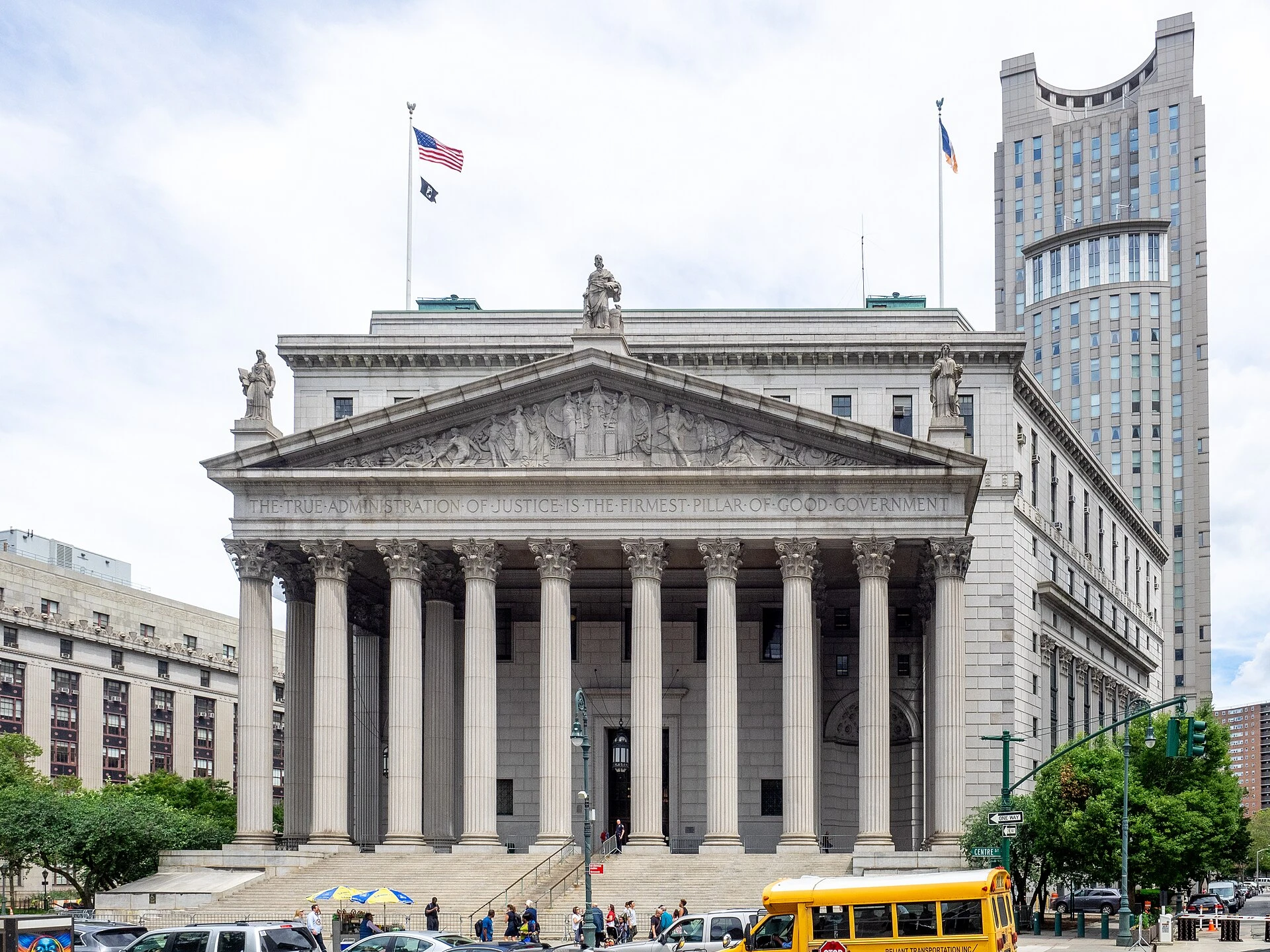
The Free Online Tools, One by One
The court system groups its free search tools under eCourts.3 You don't need an account to search WebCivil Local, WebCivil Supreme or WebCriminal.1 Each one does a different job.
| Tool | What it shows | What it leaves out |
|---|---|---|
| WebCriminal (WebCrims) | Open criminal cases with a future court date, in 172 listed courts, plus summons cases in all 5 boroughs1 | Finished cases, open cases with no court date, sealed cases, youthful offender cases, and cases where the top charge is a violation1 |
| WebCivil Supreme | Every Supreme Court civil case that has a judge request on file (an RJI), with e-filed papers pulled in from NYSCEF1 | Article 81 guardianship cases, sealed cases, and cases with an index number but no RJI1 |
| WebCivil Local | Civil, small claims, commercial claims and housing cases in 79 listed city, district, NYC civil and community courts1 | Sealed cases. Landlord and tenant cases show only once calendared and drop off 14 days after the last court date1 |
| WebFamily | Family Court and domestic violence court cases with a future date, by docket number1 | Party names. You can't search by name at all, and adoptions and sealed cases are not online1 |
| NYSCEF guest search | E-filed Supreme Court cases and their documents, searchable by party, county, case type and filing date, with no account212 | Cases and papers that were never e-filed |
| PACER (federal) | Federal civil, criminal and bankruptcy dockets and filings11 | State cases. It costs $0.10 a page, capped at $3 a document, and fees are waived if you spend $30 or less in a quarter11 |
Our read of the court system's eCourts help page and search forms, October 2026.
What WebCrims Leaves Out
We counted the WebCriminal court list in October 2026. It names 172 criminal courts across the state, from Albany City Criminal Court to Yonkers City Court. Not one of them is a town or village court.1 If a case was heard by a town or village justice, WebCrims won't show it at any stage.
WebCrims also forgets fast. The help page says it is not allowed to show finished cases at all, and tells you to call the court for the outcome.1 So a case that ended last week is gone from the screen. A conviction from 2015 was never there to find.
Where people get it wrong. Plenty of sites call WebCrims a free criminal background check. It's a court calendar. Use it to find a court date for an open case, not to clear a person.
Civil Cases and E-Filed Papers
Civil cases are the easy part. WebCivil Supreme covers every county, and its history runs deep in the city. Bronx, Kings, New York and Queens cases go back to 1986, and Richmond to 1988.1 Nassau starts in 1979 or 1980, Westchester and Suffolk in 1981, and most counties upstate were added in 2002.1
The city counties update four times a day. Most others update once a day.1 If a case was filed this morning, give it until tomorrow before you call it missing.
NYSCEF is where the actual papers live. Pick "Search as Guest" and you can read e-filed complaints, motions and decisions in Supreme Court cases.2 For a contractor or a business partner, that is often more useful than a criminal search.
The $95 Statewide Search and Its Blind Spots
For past criminal cases, the court system sells one product. The Office of Court Administration's Criminal History Record Search costs $95 and covers felony and misdemeanor cases from County, Supreme, City, Town and Village courts in all 62 counties.6 You can order it online through Direct Access, any hour of the day, or by mail.7
It's the best public tool for criminal history in the state. It also has rules that trip up almost everyone who uses it.
| The rule | What it means for you |
|---|---|
| Exact match on name and birth date | A different spelling or a wrong birth date is not a match and is not reported. Each alias and each extra birth date is a new $95 search6 |
| Middle initial ignored | The search runs on first name, last name and birth date only7 |
| Crimes only | Violations and infractions are not reported6 |
| Town and village gap | No town or village outcomes from May 1991 through 2002, and only limited data from 2002 to 20076 |
| One old misdemeanor drops off | A person whose only conviction is one misdemeanor more than 10 years old shows nothing6 |
| Stale open cases drop off | A case with no outcome and no activity for 5 years is left out unless there's an open warrant6 |
| State courts only | No Family, civil or federal cases. It is not an FBI or nationwide check6 |
| Not certified | For court or a license board, you need a Certificate of Disposition from the court that heard the case6 |
A "No Results Found" search comes back in real time. If any name gets a hit, the whole order is held for review and emailed the next business day.6
Want your own record instead? That's a different agency. The state Division of Criminal Justice Services sends your own fingerprint-based rap sheet for $17.50 in New York, by mail in three to four weeks.10 It won't send anyone else's, and it doesn't release records to businesses.10
Records That Stay Closed
Some court records are closed by law, and no search tool or paid service opens them. The court system lists the main ones by statute.8
- Criminal cases that ended in the defendant's favor. Dismissals and acquittals are sealed under CPL 160.50.8
- Youthful offender cases. Sealed under CPL 720.35.8
- Grand jury minutes, probation reports and pre-sentence memos.8
- Family Court files. Not open to the public at large under Family Court Act section 166.8
- Divorce and other matrimonial papers. Kept private under Domestic Relations Law section 235.8
- Adoptions, and records that could name a sex crime victim.8
A private investigator's license does not change this list. For court files, investigators in New York work from the same public sources you can reach, plus a lot more legwork. Our guide on what a private investigator can legally do in New York covers the wider rules.
The Clean Slate Act
More records are closing. New York's Clean Slate Act took effect November 16, 2024. It gives the court system until November 16, 2027 to build the process that seals eligible convictions automatically.9
A misdemeanor becomes eligible three years after sentencing or release, whichever is later. A felony takes eight years.9 The person can't be on probation or parole or have a pending case. Sex crimes and most Class A felonies other than drug charges, murder included, are never sealed under this law.9
So a search run in 2028 may show less than the same search run today. If an old conviction matters to your case, get the certified paperwork while it's still public.
How an Investigator Runs a Full Search
Licensed investigators don't have a secret court database. What they have is a method that closes the gaps above. A thorough New York court search usually runs in this order.
- Pin down the identityFull legal name, past names and the exact birth date, since the $95 search matches nothing else
- Run every name variantEach alias and birth date in the statewide search, and each spelling in WebCivil and NYSCEF
- Check the counties that matterWhere the person lived, worked and drove, including town and village courts by phone or in person
- Pull the actual fileFrom the court clerk or County Clerk, because an index line is not the outcome
- Add federal and civil layersPACER for federal cases and bankruptcies, plus judgments and liens tied to property
Step four is where most do-it-yourself searches stop short. A docket line says a case exists. The file says what happened. Investigators often pair this with property and judgment records, which our guide on bank records and asset searches walks through.
Before you hire, check the investigator's license and ask which courts and counties the quote covers. Our NYC private investigator cost guide explains how firms bill for record work, and you can compare licensed firms in the NYI directory.
What We Hear Most
Is WebCrims a criminal background check?
No. WebCrims only shows open criminal cases with a future court date. Finished cases, sealed cases and open cases with no court date never appear, so an empty result doesn't mean a clean record.
Is a NY court records search free?
Most of it is. WebCivil Supreme, WebCivil Local, WebCriminal, WebFamily and NYSCEF guest search cost nothing. The court system's statewide search of past criminal cases costs $95 for each name and birth date.
Are criminal records public in NY?
Convictions and pending cases are, through the $95 statewide search. Cases that ended in the defendant's favor, youthful offender cases and records sealed by a judge or by law are not public.
How far back do New York court records go online?
In WebCivil Supreme, Bronx, Brooklyn, Manhattan and Queens cases go back to 1986 and Staten Island to 1988. Older files sit with the County Clerk or the court that heard the case.
Can a private investigator see sealed court records in New York?
No. A PI license gives no access to sealed cases, Family Court files or divorce papers. Investigators use the same public records you can, and add county searches and clerk files.
How do I get my own criminal record in New York?
Ask the Division of Criminal Justice Services for a record review. You get fingerprinted through IdentoGo, pay $17.50 in New York, and the record comes by mail in three to four weeks.
Where These Numbers Come From
- NY Unified Court System, eCourts Frequently Asked Questions, accessed October 2026. Back
- NY Courts, Getting Court Records and Case Information, accessed October 2026. Back
- NY Courts, e-Courts, accessed October 2026. Back
- NY Courts, Freedom of Information Law and court records, accessed October 2026. Back
- NY Courts, New York City County Clerks, accessed October 2026. Back
- NY Office of Court Administration, Criminal History Record Search, accessed October 2026. Back
- NY Office of Court Administration, CHRS Frequently Asked Questions, accessed October 2026. Back
- NY Courts, Confidential Records, accessed October 2026. Back
- NY Courts, Clean Slate Act, accessed October 2026. Back
- NY Division of Criminal Justice Services, Record Review, accessed October 2026. Back
- PACER, Pricing and How Fees Work, accessed October 2026. Back
- NYSCEF, Case Search by Name, accessed October 2026. Back
This guide is general information, not legal advice. Court tools, fees and sealing rules change, so confirm with the court clerk before you rely on a search.